Introduction to Geospatial Artificial Intelligence
Keywords:
Geoinformatics, GeoAI, Remote sensing, artificial intelligence, geospatial technologiesSynopsis
The 2030 Agenda for Sustainable Development, adopted by the United Nations in 2015, set an ambitious vision for people and the planet. Ten years later, the challenges remain—and are now compounded by new threats.
A reliable data infrastructure is vital for tracking progress on the SDGs. Without reliable, timely, and detailed data, governments cannot make informed decisions. Geospatial information enables a better understanding of the challenges and change over time in a way that traditional statistics alone cannot.
The new geospatial technologies, including Earth observation, UAV photogrammetry, and LiDAR, are transforming the way we collect geospatial data, while automated processing methods are altering the way we process it. While those innovations are not yet fully integrated into the present SDGs monitoring framework,
they are recognized as essential tools for increasing the spatial and temporal resolution of SDGs assessment.
As geospatial technology evolves, so do the skills required to use it. Artificial intelligence changes how geospatial data is processed, analysed, and applied. For the geospatial community, this means learning new approaches and integrating machine learning into daily practice.
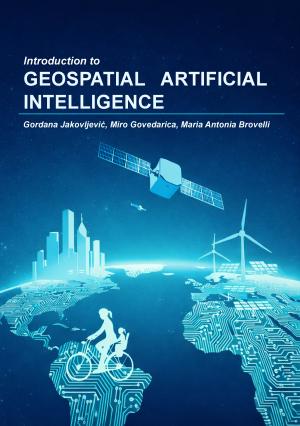
The book Introduction to Geospatial Artificial Intelligence is created to help address those challenges. It provides a practical entry point for those looking to understand both geospatial technologies and AI. The first part includes key geospatial technologies, while the second part explains the foundations of AI. Together, they demonstrate how this technology can be utilized to deliver fast, reliable, and more relevant information to support informed decision-making and the achievement of the SDGs. Ultimately, this book aims to serve as a bridge between the geospatial and AI communities, helping to build skills, foster collaboration, and unlock the full potential of geospatial data in tackling global challenges.
Downloads
Downloads
Published
Categories
License

This work is licensed under a Creative Commons Attribution-NonCommercial-NoDerivatives 4.0 International License.