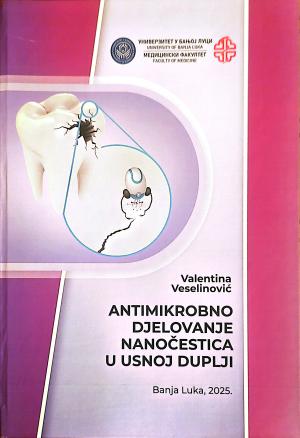
Antimicrobial activity of nanoparticles in the oral cavity
Keywords:
Antimicrobial resistance, Microrganisms, Nanoparticles, Nanotechnology, Antimicrobial activitySynopsis
According to the World Health Organization (WHO), antimicrobial resistance (AMR) represents one of the leading global public health challenges, arising in part from the uncontrolled, inappropriate, and excessive use of antibiotics. Antimicrobial resistance occurs when microorganisms, including bacteria, fungi, viruses, and parasites, develop mechanisms that enable them to resist the effects of antimicrobial drugs, thereby reducing the effectiveness of conventional therapeutic agents and increasing the risk of persistent infections.
The accelerated emergence of multidrug-resistant (MDR) microbial strains, exhibiting resistance to multiple classes of antimicrobial agents, further limits the availability of effective therapeutic options. At the same time, the limited financial profitability of antimicrobial drug development has contributed to the withdrawal of pharmaceutical companies from research and development of novel antimicrobial agents. The increasing prevalence of antimicrobial resistance, combined with the insufficient development of new and effective antimicrobial drugs, places a substantial burden on healthcare systems worldwide. Antimicrobial resistance has been characterized as a "silent pandemic" that could become one of the leading contributors to global mortality by 2050.
Nanotechnology and nanoparticles are being increasingly investigated as potential approaches for developing effective therapeutic strategies for the prevention and treatment of oral diseases. Nanoparticles with antimicrobial properties demonstrate remarkable potential to suppress microbial growth and inhibit the development of resistant microbial strains through multiple, simultaneous mechanisms of action.
Unlike conventional antimicrobial drugs, many nanoparticles exert their antimicrobial effects through multiple, relatively non-specific mechanisms, including the induction of oxidative stress, the release of antimicrobial ions, and various non-oxidative pathways. Their ability to interact with multiple cellular structures and molecular targets, rather than relying on a single specific receptor, may make the development of microbial resistance more difficult and contribute to their broad-spectrum antimicrobial activity.
This monograph provides a critical evaluation of current scientific knowledge regarding the antimicrobial potential of various nanoparticles, their mechanisms of action, their potential preventive and therapeutic efficacy, as well as their therapeutic limitations and directions for future research.
Downloads
Downloads
Published
Categories
License

This work is licensed under a Creative Commons Attribution-NonCommercial-NoDerivatives 4.0 International License.