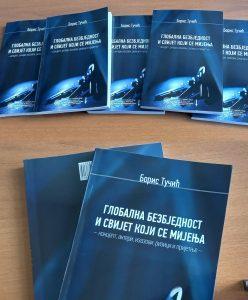
Global security and the changing world: concept, actors, challenges, risks and threats
Keywords:
Global security, concept, actors, challenges, risks and threats, global security governanceSynopsis
The monograph examines the contemporary concept of global security, the historical and socio-political circumstances surrounding its establishment following the end of the Cold War, and the key factors that shaped it. It also analyzes the most significant theoretical approaches to the concept of international, or global, security, ranging from classical perspectives—particularly realism and liberalism—to contemporary or alternative approaches, including critical security studies, the Copenhagen School, social constructivism, and feminism.
Furthermore, the monograph explores the principal actors in global security as entities whose actions, as well as omissions, generate both positive and negative consequences for global security. These actors include universal and regional international organizations, multinational corporations, socio-political movements, the global market, and even the individual.
Threats to global security are examined through the sectoral categorization developed by the Copenhagen School—military, political, economic, environmental, and societal sectors—although contemporary security threats are multifaceted in nature and produce consequences across all identified security sectors.
Finally, the monograph addresses the issue of global security governance by examining four theoretical models for the prevention, reduction, and elimination of global security threats: the model of a just bargaining process, the global community model, the globalized community and security clusters model, and the centralized model.
Downloads