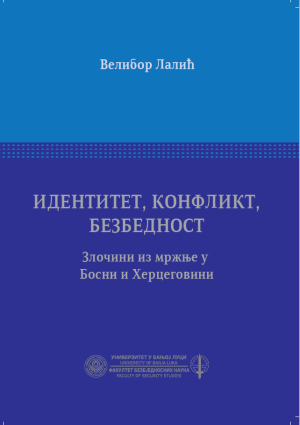
IDENTITY, CONFLICT, SECURITY
Keywords:
Hate crimes, identity, conflict, security, Bosnia and HerzegovinaSynopsis
The study of security in Bosnia and Herzegovina is inseparable from the interrelation between (opposing) collective identities and conflict. National, ethnic and religious identities play a major role in social mobilisation and homogenisation, particularly during periods of instability and crisis. This monograph examines nationally and religiously motivated violence in post-war Bosnia and Herzegovina, focusing on hate crimes as conflicts between different collective identities that generate intense security dynamics.
The work is based on a two-stage empirical research project (2009–2013 and 2016–2020). Extensive fieldwork yielded original testimonies and experiences of people living in areas marked by heightened national and religious tensions, including victims of hate crimes. The author addresses theoretical-methodological challenges in defining and operationalising such violence, as well as issues of scientific objectivity and the limitations arising from the researcher’s own cultural framework. The monograph seeks to answer when, how and why hate crimes occur in Bosnia and Herzegovina and what their broader security implications are. It is intended for researchers of nationally and religiously motivated violence, as well as a wider readership interested in the nature of peace in the country
Downloads